

Living With Uncontrolled Hypertension: What My Mother Taught Me

My first experience with hypertension wasn't my own. It was my mother's.
When I was about 7 years old, my mother was pregnant with my younger brother Tony. Her blood pressure became dangerously high, turning the pregnancy into a high-risk one.
I didn't understand the medical details then. I just knew Dad kept taking us kids to the hospital to visit Mom. He would park as close to the building as possible, and we would wave up to her through the window.
Hypertension was part of our lives
Years later, Dad told me those visits often made her sad because she wanted to be home with her family.
My brother was eventually born healthy, but hypertension remained a part of our lives for years afterward. Mom wasn't allowed to have regular salt. There was always a salt substitute on the table. No extra salt on food. No potato chips. No cheating.
As kids, we barely noticed because it was simply how our family lived.
I remember a plastic Kool-Aid container in the refrigerator with a handwritten note that said, "For Mom Only." It contained one of her blood pressure medications. I tried it once. It tasted awful.

A family history of high blood pressure
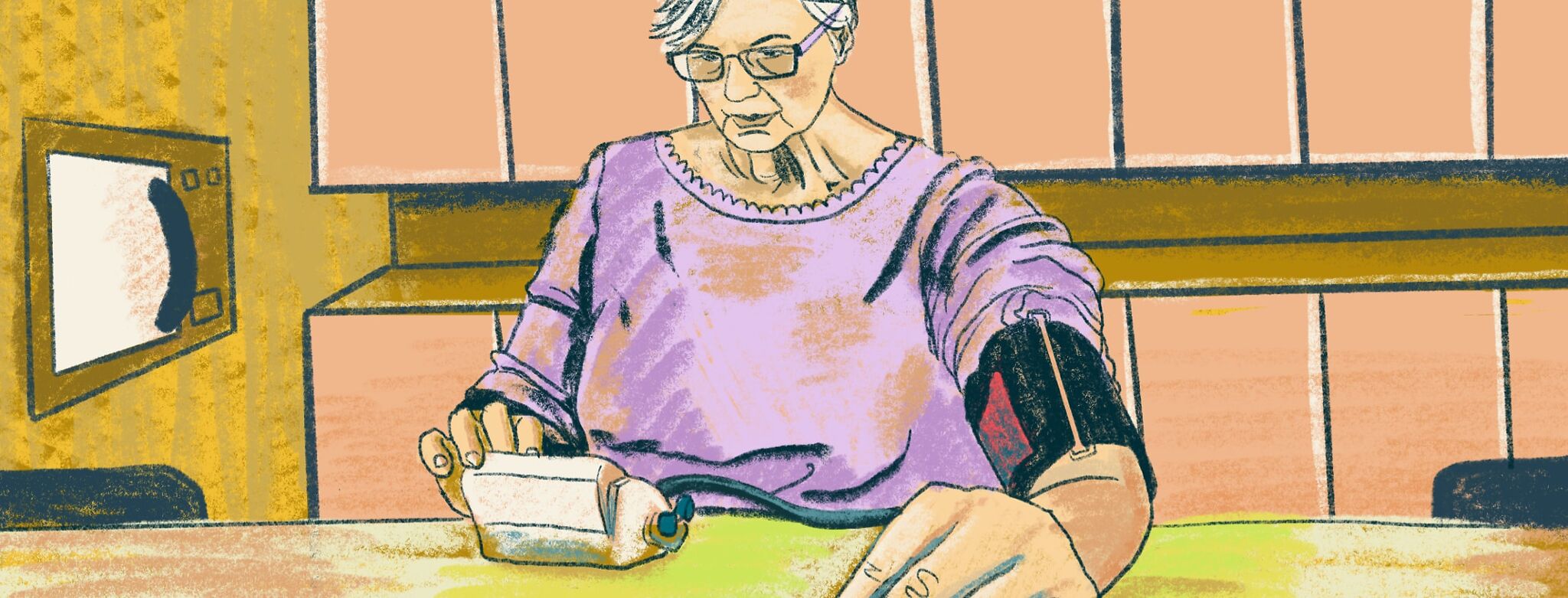
Eventually, that medication was replaced by pills, and her blood pressure became better controlled. She monitored it regularly at home using one of the old manual blood pressure cuffs, usually with my dad helping.
Growing up, Mom often talked about hypertension. She would tell us that nearly everyone in her family had high blood pressure.
Years later, I discovered she was right.
In my late twenties, I was diagnosed with hypertension myself.
My blood pressure eventually became uncontrolled
Whether genetics, severe asthma, years of medications, or some combination of factors played a role, I don't know. Research suggests that genetic factors can substantially contribute to problems with high blood pressure. What I do know is that I've now been taking blood pressure medication for nearly 3 decades.1
For many years, lisinopril alone kept my blood pressure well under control. More recently, however, my doctor became concerned about some of my readings, particularly my diastolic pressure— the bottom number in a blood pressure reading.2
Managing hypertension is an ongoing process
Like many patients, I learned that managing hypertension isn't a one-time decision. It's an ongoing process.
I now need to take multiple medications, including hydrochlorothiazide, a diuretic often referred to as a water pill. I monitor my blood pressure at home regularly and share those readings with my doctor.3
In some ways, I've become a lot like my mother.
Caring for our health is rarely simple
The irony is that life sometimes comes full circle.
After decades of carefully limiting sodium, my mother eventually developed low sodium levels and was encouraged by her doctors to increase the amount of sodium in her diet. It's a reminder that health is rarely simple.
Why does controlling blood pressure matter?
One event in particular reinforced for me why controlling blood pressure matters. Several years ago, my mother suffered a mini-stroke. My father found her slumped over in a chair with her head down.
Thankfully, she survived, but the experience was frightening for our entire family.
That incident reminded me that hypertension isn't just a number on a monitor. It can become uncontrolled again quickly, and it's a major risk factor for stroke, heart disease, kidney disease, and other serious health problems.4
My advice for life with hypertension
Managing blood pressure can sometimes feel like a constant game of adjustments — monitoring readings, taking medications, making lifestyle changes, and working closely with your healthcare team. But those efforts are important.
My advice is simple: See your doctor regularly, take your medications as prescribed, and monitor your blood pressure at home. Those numbers provide valuable information not only for your physician, but for you as well. They help identify trends, show whether treatment is working, and can alert you when something needs attention.
My mother taught me that lesson long before I ever needed blood pressure medication myself.
Join the conversation